

A few things that caught my eye last month…
Market
Despite my innate reticence to jump on anyone else’s bandwagon, Apple’s iPhone Duo turned out to be a decent looking bit of kit even though, according to some pesky doubters, we may need to evolve additional finger segments to hold it.1 Whilst it stirred up a pretty strong response from many secondary market specialists,2 as I wrote in an impact briefing for a client, Apple had published neither insurance excess nor out of warranty repair prices. There are no teardowns available and no used units are going to trade for months. And, whilst I’ll happily admit that a 100 part hinge3 sounds a bit sketchy, most commentary appears to be running ahead of the evidence. Whether damaged Duos get repaired or written off is not a question the data can answer yet.
Possibly more interesting / structural was the confirmation of autumn being a premium only launch with the iPhone 18 Pro and Pro Max available from 18th September, the Duo available from 23rd October and the standard iPhone 18 not available until spring, reportedly.4 Tracking Apple’s trade-in values showed them lifting the UK and European values on recent Pro Max variants and then resetting them on the new product announcement day. The iPhone 15 Pro Max was sent packing right back to its March 2026 value of £430 after a bump to £480 in August. But, even after that reset, Apple is bidding above the best third-party offers on recent Pro Max, which might result in an uncomfortable place for anyone buying premium stock through the autumn wave.
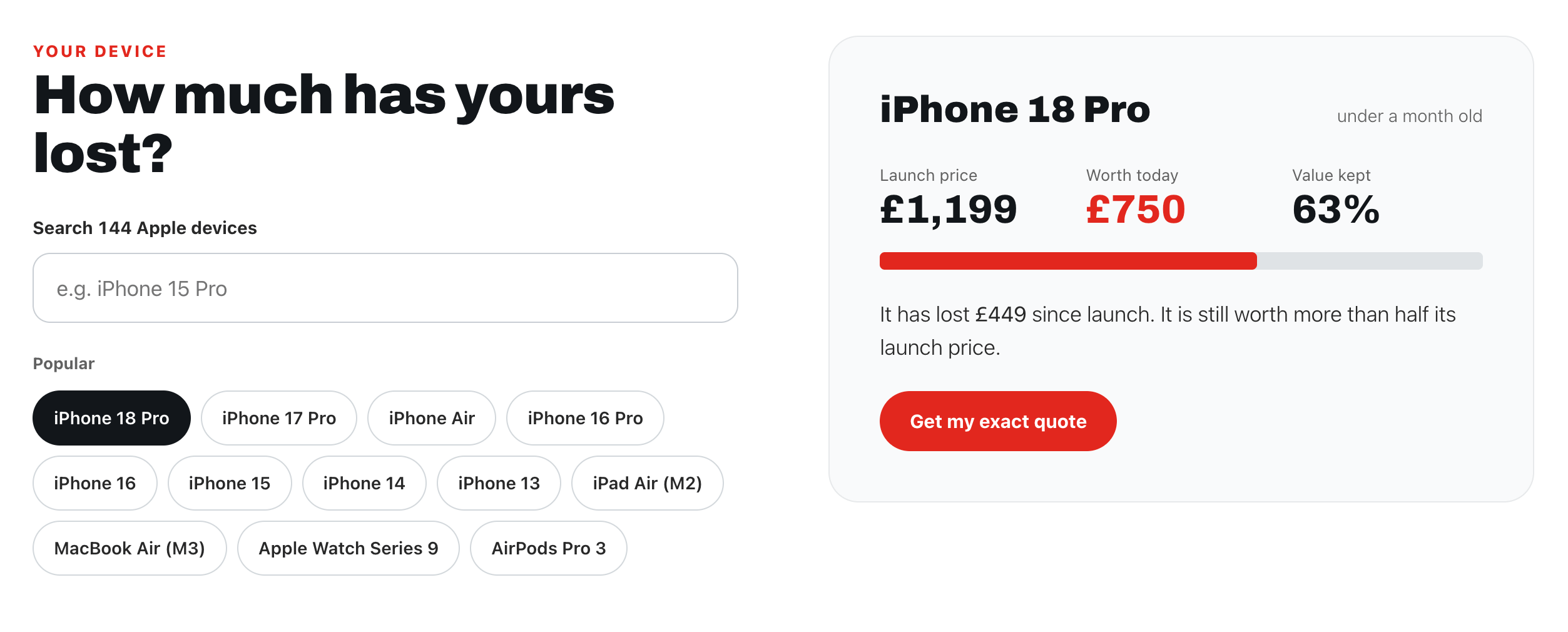
On the question of trade-in and residual values, Envirofone launched an Apple Depreciation Index this month, a press-facing data resource covering 177 Apple devices with downloadable CSVs, embeddable charts and a CC BY 4.0 licence. The headline number, that an iPhone loses 42% of its value in its first year, is the sort of shareable stat that tends to travel, and the underlying dataset will likely become a reference point in the general press for how the sector talks about depreciation. Worth a look, both for the data and as an example of an open-market operator packaging useful trade-in intelligence as a communications asset. Good stuff, although Substack won’t let me embed an iframe, so here’s a screenshot:
I’ve been well aware of limited investment news in the sector but perhaps the Chartered Institution of Wastes Management (CIWM) are able to offer an explanation. According to their September report, Unlocking investment in circular economy (reuse, repair, and recycling) infrastructure in the UK, the constraint is not the availability of capital, but the conditions required to deploy it with confidence.5 It's worth a read, even if you don't get past the electronic and electrical equipment (EEE) section which is good on diagnosis. Of the four material streams examined, EEE draws the least investor activity, with little evidence of debt funding because the risk profile is unattractive to banks. Citing DESNZ analysis, the report states that the share of EEE in use that is repaired or refurbished could reach 70% by 2035, but is unlikely to pass 15% without policy intervention or private investment. That feels like a stretch, and the report doesn't distinguish between installed base and share of sales, which matters: sustaining anything above 50% against new for an extended period would face significant challenges sourcing and maintaining feedstock. I struggled with some of the recommendations too. Asking impact investors to adopt greater risk tolerance and broader value metrics is naive at best. Investors, impact or otherwise, require returns, and this end of the market has yet to demonstrate them with the consistency that would justify the ask. The report also wants UK circularity policy aligned with European frameworks, which is what I suggested last December.6 I may come back to this in some greater depth. It’s a decent report with some useful points to build on.
Back in December I also suggested new VAT treatment to incentivise secondary sales,7 something mentioned in the CIWM report but without a definitive recommendation. Whilst I can’t see a UK government considering material fiscal incentives to support policy decisions in the current climate, the European Commission is at least willing to ask some questions. Their new consultation invites stakeholders to propose changes to the VAT rules so that they better support circular business models.8 The consultation targets secondhand goods and the margin scheme but contains no specific evidence related to the consumer electronics sector for which there are considerations: refurbishment costs cannot enter the margin, making repair intensive devices bear more tax; business buyers cannot recover VAT unless the dealer opts out, often making new purchases more attractive than refurbished purchases; imported stock generally sits outside the scheme; intra-EU margin sales cannot be zero rated; and the administrative burden is material. I’ll go further than last time and suggest a zero-rate for qualifying second-life devices, with full input recovery on repair and refurbishment. Limit it to stock that has already borne unrecovered VAT: consumer trade-ins, insurer claim stock and margin scheme purchases. Corporate buy-backs and lease returns that come through normal VAT chains should stay there or the device would be untaxed altogether. The opposing argument will of course be the lost revenue to treasuries. However, if governments are serious about sustainability and circularity, perhaps they should create the incentives and put their money where their mouth is. A deeper study should offset the tax reduction against waste savings, jobs, taxable profits and supply resilience with honest displacement modelling. Not every refurbished sale replaces a new one, despite the carbon footprint crowd wanting to assume so. Clearly a zero-rate would make fraud even more lucrative, but strict application of IMEI traceability, provenance and grading records could hold the compliance answers and bring device passports into the open along with it.9 Any resulting changes to the tax system should not penalise trade: relieving domestic stock, but not imports would disadvantage cross-border refurbishers. Refurbishing and repair should count wherever the work was done in pursuit of improved circularity. The application of a zero-rate on goods not listed in Annex III of the VAT Directive needs unanimity and the options published focus on the scheme rather than rates. Still, small steps. The UK could move sooner. But I doubt it will. Have your say here: https://ec.europa.eu/info/law/better-regulation/have-your-say/initiatives/18833-VAT-and-circular-economy_en
Companies
Plenty of new filings hit the Companies House data shelves over the last month. I’ll be writing in depth commentary on a few of them for reports.finsur.co.uk over the next few weeks, but in the meantime, here are a few summaries:
Navigating the maze of CTDI’s corporate structure might get a little simpler in the future as management appear to be undertaking some form of entity rationalisation. Recall that the business operates five segments: Network Services (NWS), Mobile Consumer Electronics (MCE), Set-Top-Box (STB), B2B and Mobility Product Solutions (MPS) focused on trading used smartphones and original spare parts. In the UK, that gets delivered through five or six active entities, more or less, with a few dormants hanging about mostly due to a long acquisition tail. Anyway, CTDI Milton Keynes Ltd, mostly NWS, grew revenue to £17.2m in FY2025, up 17.8% from £14.6m, which management attributed wholly to B2B customers. Management then approved a plan to transfer the trade and business operations to CTDI Glenrothes Ltd aiming for a September 2026 completion. Meanwhile the CTDI Glenrothes Ltd entity, mostly MCE, posted a very healthy 31.6% increase in FY2025 revenues to £74.2m (FY2024: £56.4m), the majority of which was generated in the UK. Management avoided providing any attribution and instead focused on their growth commitment to the UK as a strategic market for CTDI and highlighted their new capacity at Wellingborough and future efficiency gains from the consolidating entities. CTDI Huntingdon are small enough to avoid filing a P&L, but the balance sheet and management notes indicate a small profit of £43k for the year. SPOT Service Parts or Tools Ltd, the entity supporting Apple’s self-repair processes, aren’t big enough to post a P&L either, but according to the balance sheet made a small loss with the only notable change in finances being an increase in amounts owed to group companies. As for the consolidated view, well that goes through CTDI GmbH in Germany and we’ll have to wait until early next year until it gets filed. Good progress in the UK though.
Around this time last year, O2 switched the O2Recycle service partner from Ingram Micro to Likewize, which was probably the “notification of a contract that will not be renewed at the end of 2025” referred to in Ingram’s FY2024 UK filing. At the time management appeared unconcerned, going on to state that FY2025 results would remain unaffected due to onboarding replacement business. That wasn’t bluster. Ingram Micro Services Ltd posted FY2025 revenues of £202m, up 11% on their £182m from FY2024. The main driver came from their Regeneration and Fulfilment line of business, up 23%, offset by falls in the Repairs and Servicing and Asset Disposal lines. Gross margin took a bit of a hit, however, as “tighter economics in the recommerce division and a change in business mix” took hold. Management responded by keeping operating profit flat (£8.56m vs. £8.64m) and even improved the profit after tax result. That came from a £1m reduction in wages and salaries as the listed number of production staff fell by 30, and interest receivable grew by £773k.
On the other side of that O2 partnership transaction, Likewize also posted their UK entity FY2025 results during September. There’s been a bit of corporate engineering going on over the past year, with a couple of new entities whose purpose is yet unclear but, the two main revenue generating entities remain Likewize Services UK Limited (LSUK) and Likewize Device Protection UK Limited (LDPUK), with Likewize Lucid CX Limited not yet large enough to publish an income statement. LSUK’s principal activities are the sourcing, processing and fulfilment of mobile phone products and the provision of business process outsourcing services to the telecoms and insurance industry. FY2025 revenue dipped 3.8% to £180.4m (FY2024: £187.6m) which management attributed to strategic inventory purchasing aligned with key disposition channels: stocks increased 52% to £31.5m (FY2024: £20.7m). The top brass were also keen to point out the “significant new contract”, I assume O2 Recycle, was expected to “increase annualised revenue going forward.” That stock would cover around 75 days of costs of sales, against 47 days a year earlier, while an extended payment facility from “a large OEM” grew to £6.0m (FY2024: £4.8m). The operating loss widened slightly to £1.9m (FY2024: £1.7m) which management put down to depreciation on earlier investments in fulfilment and technology. A £16m equity injection from the group, largely used to repay an intercompany loan, more than halved net finance costs to £1.7m (FY2024: £3.7m) and a £3.7m tax credit then helped to swing the business to a profit of £153k. LDPUK, the FCA regulated claims and policy administration business, reported revenue of £18.0m (FY2024: £19.6m). However, the comparison covers the 17 months from incorporation in August 2023, so on an annualised basis, revenue rose. Operating profit increased to £4.7m (FY2024: £4.3m), with average headcount falling from 298 to 227. Management expects revenue to rise in 2026 as two contracts signed in 2025 with UK credit and banking customers go live which, from memory, might include the new mobile phone insurance programme available from Santander. LSUK refers to the same new “major UK banking and financial services customer” and cites a new long-term contract with “a large PLC bank”, which implies a possible renewal with Barclays PLC. The two sets of accounts reward being read side by side, which will no doubt be on the reading list for Haydn Pinnell, Likewize's newly appointed President and EVP, EMEA.10

Tesco Mobile, one of the UK’s largest MVNOs, continues to gain ground. The joint venture, owned equally by Tesco PLC and VMO2, filed £1,232m in revenues for FY2025, up 11.3% (FY2024: £1,108m). Their cost of sales grew marginally less quickly meaning that an improved gross profit managed to absorb a 12% increase in administrative expenses, primarily caused by staff numbers in operations and sales and marketing growing 36% and 29% respectively. Total headcount, including managerial increased to 366. Helpfully, management continue to identify that revenue from the transfer of goods and services to customers is derived over time as airtime services, and at a point in time as handset sales. That tells us handset sales grew 18.3% to £588m (FY2024: £497.2m), and seemingly having none of the issues that some of the MNOs have been experiencing. For more on the predicted rise of MVNOs, CCS have got some predictions here and I’ve got a full company analysis on Tesco Mobile underway, available on reports.finsur.co.uk shortly.
Tesco Mobile’s long-term insurance partner, Asurion Europe Limited, added to the plethora of year end filings in September. Remember that much of this is academic with, so far as I am aware, the still incomplete D&G acquisition underway. Turnover for FY2025 was £14.2m, down 11.3% (FY2024: £16.0m), a drop the directors described as slight. The majority of the revenue comes from the market support agreement with the US parent contributing £10.8m versus £12.7m a year earlier, still 76% of the total. Without further analysis, or trying to establish correlation or cause, income from administering UK insurance programmes edged up 1.8% to £3.4m, perhaps tracking Tesco Mobile’s improved sales. Gross profit, on the other hand, fell by £1.2m to £2.7m, taking operating profit down from £2.2m to £1.0m, which included a one-off £0.3m VAT recovery. Profit before tax fell 48% to £1.5m, and a £2.7m write-down of the deferred tax asset turned it into a loss after tax of £1.2m. Its sister company Phone Repair Centre Limited, which provides fulfilment, logistics and repair, reported turnover of £8.7m, 2.3% lower, and profit before tax of £0.3m, down 21%, whilst paying a £2.0m dividend. There was some interesting post-balance sheet tidying up between the two entities: after thirteen years of handing its tax losses to a sister company for nothing, Asurion Europe's board discovered the problem in 2026, which, by happy coincidence, was the first year the group had an obvious reason to count them. As I’ve mentioned before, treasury and tax accounting in another life…
Raylo CEO Karl Gilbert took to LinkedIn last month to announce that the business has passed $100m in annual recurring revenue, profitably and with growth running at 60% year on year. In sterling that’s roughly £75m, up from the £48.4m I reported in my FY2025 Raylo analysis. That sits comfortably with the trajectory in the filed accounts and with the company’s reliable track record on ARR claims. Raylo now counts over 250,000 active consumers and businesses, with LG, HP, Dyson, PlayStation and Apple on the partner roster. Management is also targeting $1m of revenue per employee by the end of 2026, which implies ARR growing by more than half while headcount remains steady. Good stuff. They’ve also extended their accounting year by three months, to 31 December, so detailed analysis of the FY2026 filing may not be available until October 2027. That’s likely to be a deliberate, lasting choice rather than a tweak, possibly matching what a US raise, a later round or a trade buyer would expect to see.
Corporate Mobile Recycling Limited (CMR), the secondhand phone wholesaler acquired by Tech Data (now TD Synnex) in 2016, posted their FY2025 accounts at the beginning of September. The filing confirmed that CMR and Corporate Mobile Recycling Espana S.L. entered into a Business Transfer Agreement with Cordon Group under which CMR transferred its mobile recycling business, including its technology platform, intellectual property, tools, equipment and remaining inventory, to Cordon Group with effect from 1 November 2025. Things appeared to be going well for the business until FY2023 when the full effects of Brexit, COVID and rectifying a substantial VAT underpayment tipped momentum in the opposite direction as revenue dropped from £22.5m to £10m. Management must have seen enough of the writing on the wall, outsourced what they could, and put the business into run off for a November 2025 wrap up, which they appear to have hit bang on and even got a euro from Cordon for their troubles. Great focus.
Investments
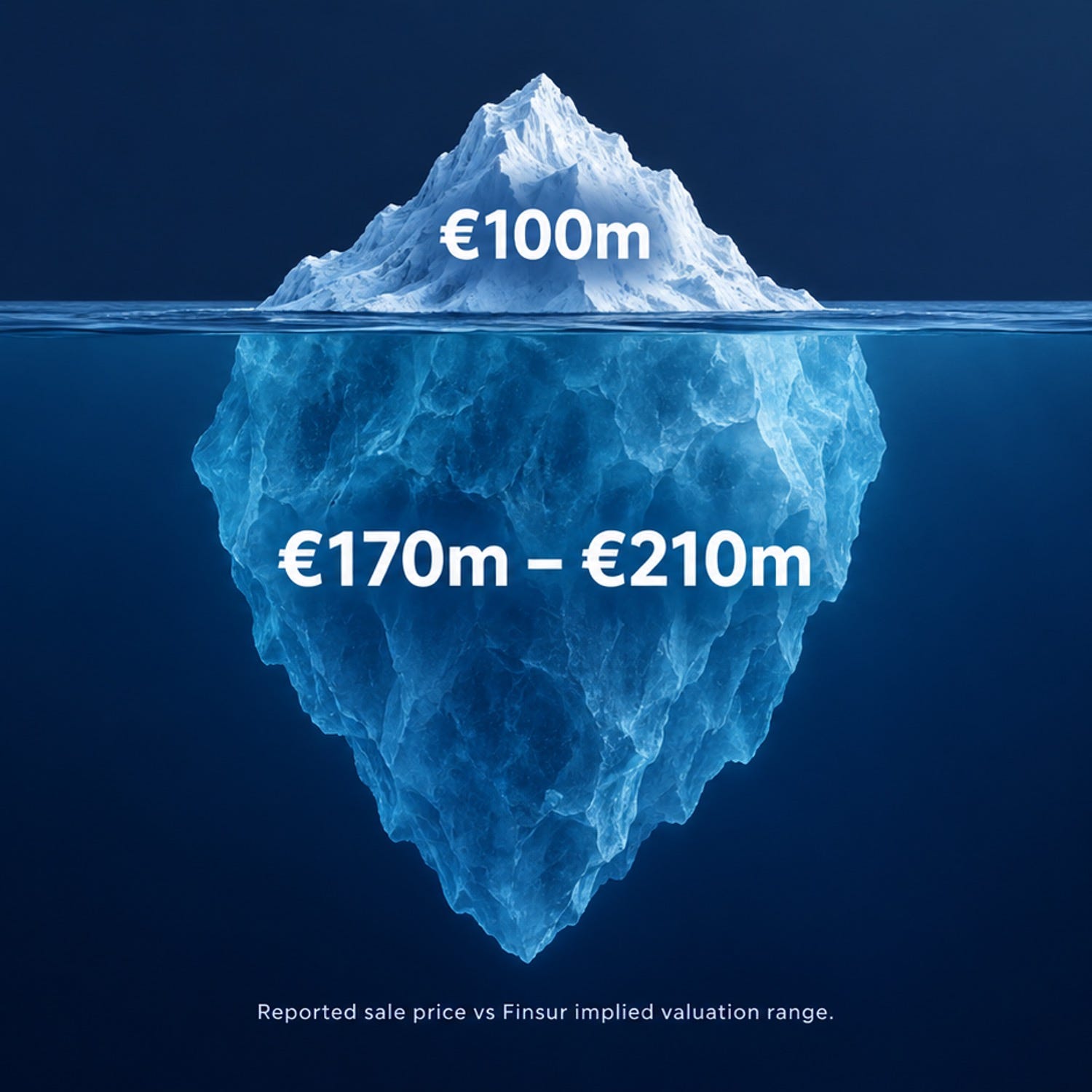
If you’re looking to make an investment and have a spare €100m, according to rumours, Telefónica are exploring a sale of their captive insurance business, Telefónica Seguros.11 Other than an existing relationship and perhaps the cash, I am unclear why Allianz are the front runners. Maybe it was just lazy reporting? With 95% of the book being mobile phone insurance, surely, one of the specialists like Assurant, Allstate Protection Plans (SquareTrade), or Likewize would be far more suited to delivering the synergies required to bridge the valuation gap. Maybe even Asurion are looking down the back of the sofa for a few extra notes to spend in Europe? Either way, the buyer is going to have to look closely at the numbers. Direct premiums from the three contributing European markets were flat, with the 7.7% increase in overall premiums driven by accepted reinsurance from Brazil. Profits were up, largely because the captive decided to keep more of its own risk, which feels like a deliberate pre-sale tidy up. I’ve no idea where that €100m price tag came from, but after a quick look at the balance sheet, that might be undervaluing the asset. Full analysis of the latest FY2025 results available at reports.finsur.co.uk.
If you’re struggling to find €100m, perhaps something a little cheaper? Long gone it seems are the days when a start-up would hit the news after raising $xmillion from their latest round. Now it seems they have to announce their series target: “Fairphone targets €50m Series C following record first-half growth.”12 The circular smartphone manufacturer is seeking at least €50m to support further expansion after smartphone shipments increased 74% year-on-year in H1 2026, marking its strongest first half to date.
Peace,
sb.
Ibid.